
Face Shape Heart: How to Tell and What Styling Suits It
Identify a face shape heart from forehead, cheekbone, jaw and chin proportions, then use haircut, beard, brow and glasses tips that balance the silhouette.
Table of Contents
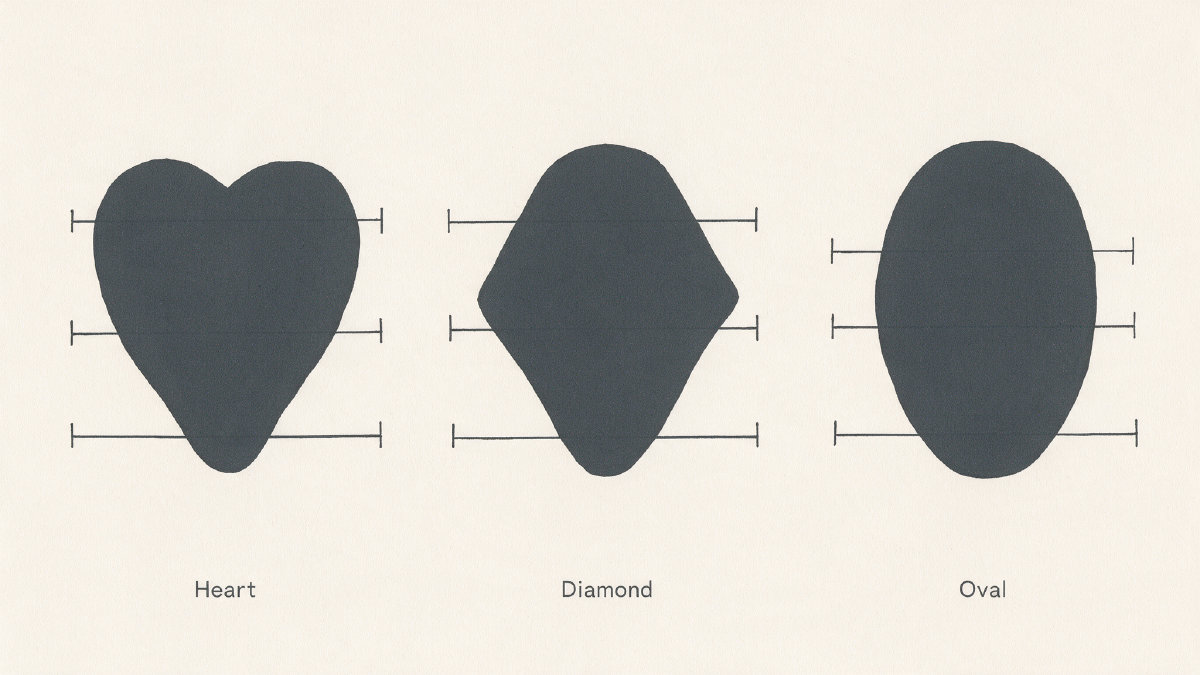
A heart-shaped face has a broad forehead and cheekbones that taper toward a narrower, often pointed or softly pointed chin. The widow’s peak is optional rather than proof of the shape.
If you’re looking at your face from the front with your hair pulled back, you should see that broad-top-to-narrow-chin silhouette.
That’s the basic pattern for a heart-shaped face — a broad forehead and cheekbones that narrow toward the jawline and point downward toward the chin. But it’s not always perfect. Sometimes people have a slightly rounded forehead, or their cheekbones are just a bit more prominent, or their jawline doesn’t taper as dramatically. And sometimes they have a widow’s peak (like I do), but it’s still considered a heart-shaped face. So it’s not a hard-and-fast rule about where the widest part of the face is located, but it’s generally agreed that the upper half of the face will be wider than the lower half.
How to Tell if You Have a Heart-Shaped Face
There are several ways to determine what shape your face is. Obviously, one of the easiest is to look in the mirror while standing in front of a light source and take a good look at your face from the front. If your face clearly matches that wide forehead, prominent cheekbones, and narrow-chin pattern…
…then chances are you have a heart-shaped face. But if your proportions don’t follow that pattern…
…then you probably don’t have a heart-shaped face. However, there are times when a person might have a mixed face shape. For example, someone could have a heart-shaped face on top, but then rounder cheeks and a more curved jawline below. In those cases, I would match them to the closest overall pattern.
You can also check out my article about how to tell your face shape by using a manual method.
The other way to tell is by measuring your face. To do this, pull your hair back so it doesn’t cover your forehead, and stand in front of a light source. Then use a ruler to measure the following areas:
• Face length – from the center of your hairline to the tip of your chin
• Forehead width – across the widest part, roughly midway between your eyebrows and hairline
• Cheekbone width – from just below the outer corner of one eye across to the other
• Jaw width – following the jawline from the corner below one ear to the corner below the other
When comparing these four measurements, you’ll notice that a heart-shaped face will have the forehead as the widest area, the cheekbones sit close behind, and the jaw narrows significantly toward the chin. If any of these measurements are roughly equal, then you probably have a different face shape.
Heart vs. Diamond
I’ve heard many people confuse diamond and heart shapes. But here’s how to distinguish between the two.
Diamond is cheekbone-led. That means the cheekbones are the widest area of the face. When viewed from the front, a diamond-shaped face appears to have a very strong center. The forehead isn’t as wide as the cheekbones, but it’s definitely wider than the jawline.
Heart is forehead-led. The forehead is the widest area of the face, and the jawline tapers toward the chin. There’s no strong center line to speak of, and the forehead is much wider than the jawline.
Heart vs. Oval
Oval is longer and softer. While the oval shape is similar to the heart shape, it’s longer from the top of the forehead to the tip of the chin. Also, an oval face has a moderate amount of width, and the proportions are more evenly balanced than the heart shape.
Heart vs. Round
Round is nearly equal in length and width. A round face has a circular outline, with full cheeks and a curved jawline without sharp corners. A round face shape has a softness to it that the heart shape lacks.
Heart vs. Inverted-Triangle
Inverted-triangle overlaps strongly with heart. An inverted-triangle face shape has the same appearance as a heart shape, but the difference is usually in the hairline: a heart shape has a widow’s peak, while an inverted-triangle hairline is straight across or slightly rounded. This is a very rare face shape, but it’s worth noting because it looks quite similar to a heart shape.
Now that you know how to determine if you have a heart-shaped face, let’s talk about how to style it. Since the upper half of the face is usually wider than the lower half, your styling goal is to achieve a visual balance between the two.
Styling Tips for a Heart-Shaped Face
Because the upper half of the face is usually wider than the lower half, you want to add some visual weight to the lower half of the face. You can do this with the right hairstyle, glasses, facial hair, and brow grooming.
Haircut Choices
Keep movement or width around the sides and lower face.
Avoid styles that emphasize the crown.
Avoid styles that fully expose the forehead.
For men, avoid high skin fades.
For women, avoid high crown volume.
Here are some great haircut choices for heart-shaped faces.
Chin-Length Bob
Wavy Lob
Waves or Curls at the Ends
Side-Swept Bangs
Side Part
Longer Hair Drawing the Eye Downward
Low Styles
Low to Mid Fade
Controlled Side Width
Medium-Length Curtain Style
Flat Crown
Glasses Choices
Reduce the emphasis on the top of the face by choosing frames that carry attention downward. Frames that are heavier at the bottom, such as bottom-heavy frames, or frames with lower-rim embellishment, work best. Aviator frames and oval frames also work well.
Avoid cat-eye frames. They draw too much attention to the top of the face.
Avoid decorative top-heavy frames. These also draw attention to the top of the face.
Facial-Hair Choices
For adults who can grow and want a beard, a neat, controlled fullness along the jaw and chin adds visual weight to the lower face. A groomed mustache and clean cheek line keeps attention away from the upper face.
Brow Grooming
A rounded, softly arched brow complements the taper of a heart-shaped face. Avoid very flat brows and extremely high arches.
Overall, styling tips for a heart-shaped face aren’t all that different from other face shapes. The key is to focus on overall proportions and personal preference. Don’t try to correct the natural shape of your face. Just use the information I’ve given you above to find the options that work best for you.
Sources
Measure your own face
Free, in your browser. Your photo is never uploaded.
- Attractiveness TestFace rating, PSL range and eye type.
- Face Symmetry TestHow evenly the two sides match.
- Jawline AnalyzerJaw angle, jaw width and chin taper.