
What Matters About Face Shape for Short Hair?
Consider face shape for short hair alongside texture and upkeep. Compare pixies, bobs and textured crops, then prepare clear questions for your stylist.
Table of Contents
Face shape is the starting point. It’s the foundation of every haircut and hairstyle that we choose. But when it comes to short hair, there’s no one face shape that’s best suited for a particular cut or style.
So what does matter about face shape when choosing a short hairstyle? Let’s break it down.
First, it’s important to understand that while face shape is a consideration, it’s not a suitability test. In other words, just because you have an oval face doesn’t mean that you’re only suited for certain styles. The same goes for round, square, heart, and long faces.
Rather than being a suitability test, face shape becomes more of a reference point. When you understand your face shape, then you can determine what kind of proportions will work best for your features. And since length, volume, and texture are all adjustable (or at least very flexible), you’ll find that there are many options for most people.
But if you’re looking for a general idea of how different face shapes might respond to various hairstyles, here’s a quick look at some general guidelines.
Oval Faces
Oval faces are often considered the most versatile of all face shapes. They’re generally balanced, so they’ll usually respond well to nearly any cut. That said, I do think that the proportions of the haircut can be adjusted based on facial structure.
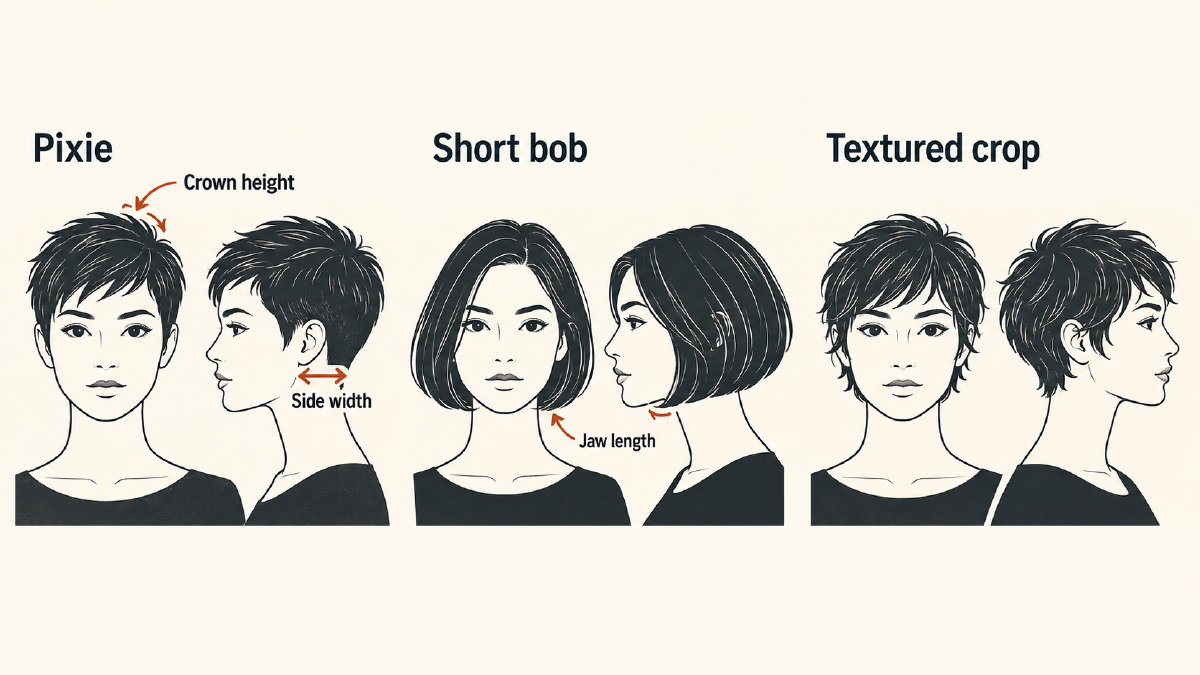
For example, someone with a very round face might benefit from a little more height in the crown area. This creates visual elongation by drawing attention away from the roundness of the face.
Long Faces
People with long faces tend to want a bit more width in their hair. Rather than trying to add height, they should focus on creating width through side volume.
Square Faces
A square face has strong angles, so adding softness around the jawline will help soften those lines. You can also create a bit of movement in the top of the head to draw attention upward rather than downward.
Heart-Shaped Faces
Heart-shaped faces tend to have a wide forehead, but a narrower chin. Creating a bit of width at the bottom of the face will balance out the overall look. For example, adding volume in the lower part of the face can give a heart-shaped face more of a rounded appearance.
In addition, you may want to consider whether or not you want your jawline to be visible. If you don’t mind having a bit of jawline showing, then you’ll have a lot more styling flexibility. If you prefer a very clean jawline, then you’ll need to be careful about the placement of your layers.
Now that we’ve discussed the basics of face shape, let’s talk about specific styles. First, let’s compare a pixie, a short bob, and a textured crop.
Pixies
Pixies are typically very close to the head. Because of this, the length or texture on the top of the head is often the main thing that distinguishes one pixie from another.
There are pixies with very soft, piecey textures; others have sleek, sculpted tops. There are even pixies that are almost completely straight, with only the tips of the bangs slightly curled.
Pixies finish with a very close-to-the-head look. Some people like this, and some people hate it. I personally love them, and I’m sure that I’d never go back to anything else. But I know plenty of people who really dislike the way pixies look on them.
Short Bobs
The difference between a short bob and a pixie is that a short bob is usually around the chin or slightly above. Pixies are much shorter — sometimes even as short as 1 inch. So a short bob gives you a little more room to play with.
And since the top of the head isn’t quite so close to the head, there’s more room to adjust the amount of texture on the top. Short bobs can be blunt, layered, tucked, waved, or sleek.
Textured Crops
If you want something similar to a short bob, but with a bit more relaxed edges, then you may want to consider a textured crop. These are usually choppier layers, and the edges aren’t as precise as with a short bob. Textured crops allow for a bit more movement over precision.
These types of cuts also tend to break up the strong lines of the face. Since they’re usually cut right along the jawbone, they also add softness to a square face.
French Bobs
One of my favorite styles for short hair is the French bob. These are basically short bobs that sit right at the jawline. Unlike regular short bobs, these are usually pretty short, and they’re often blunt and jaw-skimming.
They’re also often suggested for people with oval and heart-shaped faces. One thing that makes these different from a typical short bob is that the jawline is adjustable. If you want a very defined jawline, you’ll probably want a French bob with bangs. If you prefer a softer jawline, then you’ll probably prefer a French bob with soft face-framing.
No matter which of these styles you choose, the key is to keep in mind that all of them are adjustable. A stylist can always make a short bob into a longer bob, or vice versa. Similarly, a stylist can take a textured crop and turn it into a very sleek, precise cut.
Of course, that’s not always the case. Many people would prefer to keep their hair as short as possible, and wouldn’t ever want to grow it out. But when you start working with your hair, you’ll find that it’s easier to grow it out than it is to shorten it. So if you’re considering a short haircut, keep that in mind.
Texture and Density
I know that many people say that face shape is the most important factor when choosing a short haircut. However, I believe that texture and density are just as important.
Fine hair tends to require more fullness than thick hair. And while fine hair can certainly wear a bob, it often requires a bit more work to make it look full. This is where the importance of texture and density comes in.
Fullness for Fine Hair
Fine hair needs to be styled in such a way that it appears full. This is why so many people with fine hair choose blunt bobs. A blunt bob allows you to add height to your hair without making it look too voluminous. Plus, you can lift the roots just enough to add some extra body to your hair.
Thick Hair Needs Internal Shaping
On the other hand, thick hair doesn’t need to be styled in order to appear full. Thick hair will naturally appear full, so it’s important to debulk it before cutting it. If you leave it uncut, it will expand out in all directions, creating a triangular shape.
This means that you’ll need to layer your hair internally so that it won’t expand out as much. And again, you’ll want to make sure that the layers aren’t too high, because otherwise, your hair will end up looking bigger than it actually is.
Wavy and Curly Hair
When it comes to wavy and curly hair, things get a bit more complicated. While it’s true that curly hair is generally less voluminous than straight hair, it also shrinks significantly when dry. That means that you’ll need to cut your hair a bit longer than you think you need to.
Plus, the way that your hair moves will affect the way it looks. Wavy and curly hair moves differently than straight hair. So if you’re considering a short haircut, you’ll want to make sure that your stylist knows exactly how you want your hair to move when it’s fully dry.
Upkeep
It’s also important to remember that the upkeep involved in maintaining your hair can vary greatly depending on the type of cut you choose. A deliberately styled pixie will require a bit more time and effort than a crop that allows you to have a less polished finish each day.
That said, everyone has different preferences regarding maintenance. Just because one person prefers a perfectly polished look doesn’t mean that another person will feel the same way. So it’s important to discuss your personal maintenance preferences with your stylist before getting your hair cut. Tell your stylist what shape and finish you want, as Color Wow recommends. For curls, Kiri recommends bringing reference photos with a starting texture similar to yours and discussing the length you want when it’s fully dry. You’ll also want to confirm how your stylist wants you to arrive, rather than assuming everyone has the same preparation routine. And ask for a maintenance plan that fits your own routine.
After you’ve determined the type of cut you want, you’ll also want to ask your stylist how often you’ll need to come in for touch-ups. For example, if you’re planning on growing your hair out, then you’ll need to schedule your appointments accordingly.
Measurements
As far as measurements go, I’ve heard that some stylists use a rule of thumb when determining whether or not someone should cut their hair short. According to Color Wow, a short bob usually sits at chin length or slightly above, while a lob sits closer to the collarbone. I’ve also heard that some stylists use a 2.25-inch measurement to determine whether or not someone should cut their hair short. Color Wow attributes that rule to John Frieda, but describes it as a shortcut and lists other factors a stylist considers. Women.com also reports Jen Atkin’s criticism that the rule oversimplifies choosing a haircut. These sources don’t establish that 2.25 inches is a cutoff that predicts whether short hair will work for you.
However, I don’t agree with either of these methods. Both seem too simplistic to me. For instance, a person with a very narrow forehead could easily pass either of these thresholds, yet still need her hair cut short.
I think the best method is simply to look at the natural contours of the face and see how the hair sits against the face. If the hair covers the entire face, then it’s definitely too long. But if the hair stops at the jawline, then it’s just right.
My favorite way to determine whether or not someone should cut their hair short is to look at the angle of the jawbone. If the jawbone is angled outward, then it’s definitely too long. But if the jawbone is angled inward, then it’s just right.
Of course, I’m sure that there are plenty of other ways to determine whether or not someone should cut their hair short. But until I hear of a better method, I’ll stick with the jawbone angle.
Sources
Measure your own face
Free, in your browser. Your photo is never uploaded.
- Attractiveness TestFace rating, PSL range and eye type.
- Face Symmetry TestHow evenly the two sides match.
- Jawline AnalyzerJaw angle, jaw width and chin taper.