
What Is Looksmaxxing? A Practical Guide for Adults
Learn what looksmaxxing is, how its labels differ, and how adults can approach grooming choices without chasing appearance scores.
Table of Contents
Looksmaxxing is the practice of maximizing one’s physical appearance, and it’s a very common thing that people do. It can be as simple as choosing your clothes each morning, or as involved as spending hours in front of the mirror trying to perfect your makeup.
However, looksmaxxing isn’t limited to skincare, grooming, and clothing choices. It also includes general fitness (or lack thereof), because being physically healthy has a significant impact on how you look.
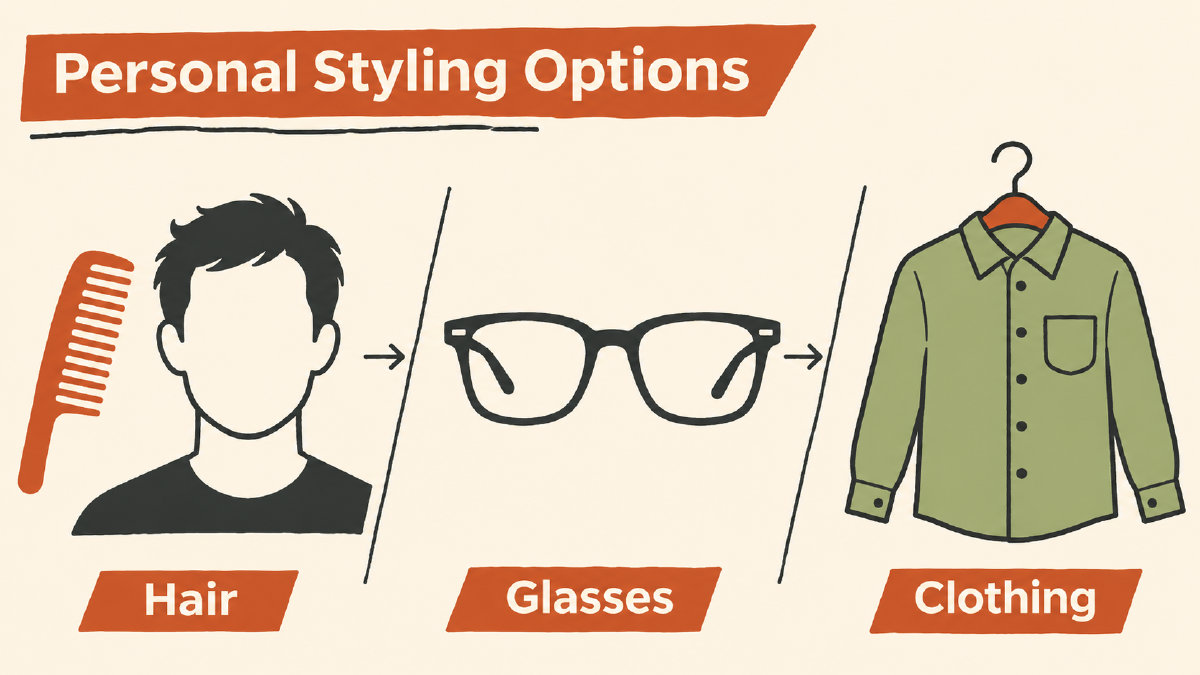
Softmaxxing and hardmaxxing
And while most people who are interested in looksmaxxing would agree with the above statement, there are some people who stick to simple, non-invasive changes, and that approach has been given a label: softmaxxing.
So what does softmaxxing mean?
I’ve seen a woman named Lizz use the term softmaxxing quite frequently, but I can’t verify who coined it. Softmaxxing generally refers to simple, non-invasive appearance changes, though its boundaries vary. The distinction concerns the practices involved, rather than whether someone wants to change their entire appearance from top to bottom.
The word itself comes from the words “soft” and “maxx.” The idea behind the word is that softmaxxing is a way to maximize one’s appearance without being too extreme.
While I’m not sure that I like the term softmaxxer, I think it’s a good distinction between ordinary appearance practices and more extreme measures. However, I’m also not sure that I like the term softmaxxing, because I don’t think that the term should be used to describe people who aren’t actually doing anything extreme.
I prefer the term looksmaxxing, and I think that’s a better way to describe what many people do when they want to make small or moderate changes to their appearance. And again, I don’t think that looksmaxxing should ever be confused with hardmaxxing, which is another term that has been used to describe people who want to make extreme changes to their appearance.
But I think that both terms are useful for distinguishing between everyday appearance practices and those that are so extreme that they’re potentially harmful. I just wish that the labels weren’t being used to judge individuals. Just because someone likes to look their best doesn’t mean that they’re unsafe or ineffective. Wikipedia includes everyday grooming and clothing choices under softmaxxing, but it includes less conventional practices too. I’d look at each practice before deciding whether it’s safe or effective, because the label alone doesn’t tell me that.
Haircut Consultation
If you’re looking for help deciding on a haircut, then I highly recommend finding a good stylist who will take time to understand your needs and concerns. I had a great experience yesterday with my stylist, and we were able to work through a few things to determine what kind of cut would work best for me.
My main concern was whether or not I could manage a drastic change around the desired cut. I didn’t want something that required constant styling, or that would require daily maintenance, like trimming every single day. But I did want to find something that worked well with my hair type, and that wasn’t too difficult to maintain.
We discussed several different styles, and after narrowing down my options, we settled on a style that I’m really happy with. My stylist helped me visualize the final result.
Glasses Try-On
I decided to try on a couple of frames today to see what would fit best on my face. I’ve been eyeing these glasses for a while now, and I thought they might work well on my face.
First, I tried them on right away. They looked okay, but I immediately noticed that the bridge rested flat on my nose, which always makes me uncomfortable.
After wearing them for an hour, I checked the glasses again and made sure that there was no pinching or red marks where the frame rested on my nose.
Then I moved on to the temples. I wanted to make sure that the temple arms rested gently against my head without squeezing into my skin. I also wanted to make sure that the glasses didn’t feel tight behind my ears.
Finally, I tried looking down at my phone while wearing the glasses, and I wanted to make sure that the frames stayed in place and didn’t slip off my nose or slide toward the sides of my head.
These glasses definitely fit well. I’m not sure that I like the color, but I think that the shape is perfect for my face.
Close-Up Selfie
When I posted pictures of my new haircut yesterday, I got a lot of comments asking if I was considering getting a facial score. So I decided to give it a shot.
I knew that taking a selfie close enough to get a clear view of my face wouldn’t be flattering, but I still wanted to give it a try anyway.
I honestly couldn’t tell what I looked like in that picture. I kept checking the image, thinking that I must have missed something, but I couldn’t figure out what I was supposed to be looking at. I finally gave up and started over.
It’s funny how much a photo can alter your apparent facial proportions. For instance, in the first photo, my nose seemed to be wider than it actually is, and in the second photo, my cheekbones seemed to be wider than they actually are.
In other words, the camera distance affects the perceived facial proportions, and I learned that lesson the hard way. When I was younger, I used to take pictures of myself using my phone, and I’d look back at the photos wondering why I didn’t look like the model in the magazine I was reading. I never realized that the published mathematical model of camera-distance distortion affects the perceived facial proportions.
Short camera distance = increased apparent nasal breadth relative to cheekbone width.
Long camera distance = decreased apparent nasal breadth relative to cheekbone width.
The distorted ratio does not accurately reflect the nose’s three-dimensional appearance. I’d pay attention if appearance routines became distressing, or if I kept dwelling on a feature or withdrawing from other people. Nebraska Medicine lists these as warning signs and recommends talking with a mental health professional if you’re concerned.
Sources
Measure your own face
Free, in your browser. Your photo is never uploaded.
- Attractiveness TestFace rating, PSL range and eye type.
- Face Symmetry TestHow evenly the two sides match.
- Jawline AnalyzerJaw angle, jaw width and chin taper.