
How to Choose a Haircut for Rectangle Face Shape
Choose a haircut for rectangle face shape by comparing short, medium and long cuts, fringe, side fullness, texture and everyday upkeep.
Table of Contents
If you have a rectangle face shape, then the advice I’ll give in this post is probably going to sound really familiar. It’s the same advice that I give for those with square faces. And it’s also the same advice I give for people who are looking for an elongated silhouette.
But I’m giving it to you now because if you’re looking for a longer, more angular look, and your face has a long, angular outline (i.e., noticeably greater length than width), then these tips will help you choose the best haircut for your face shape.
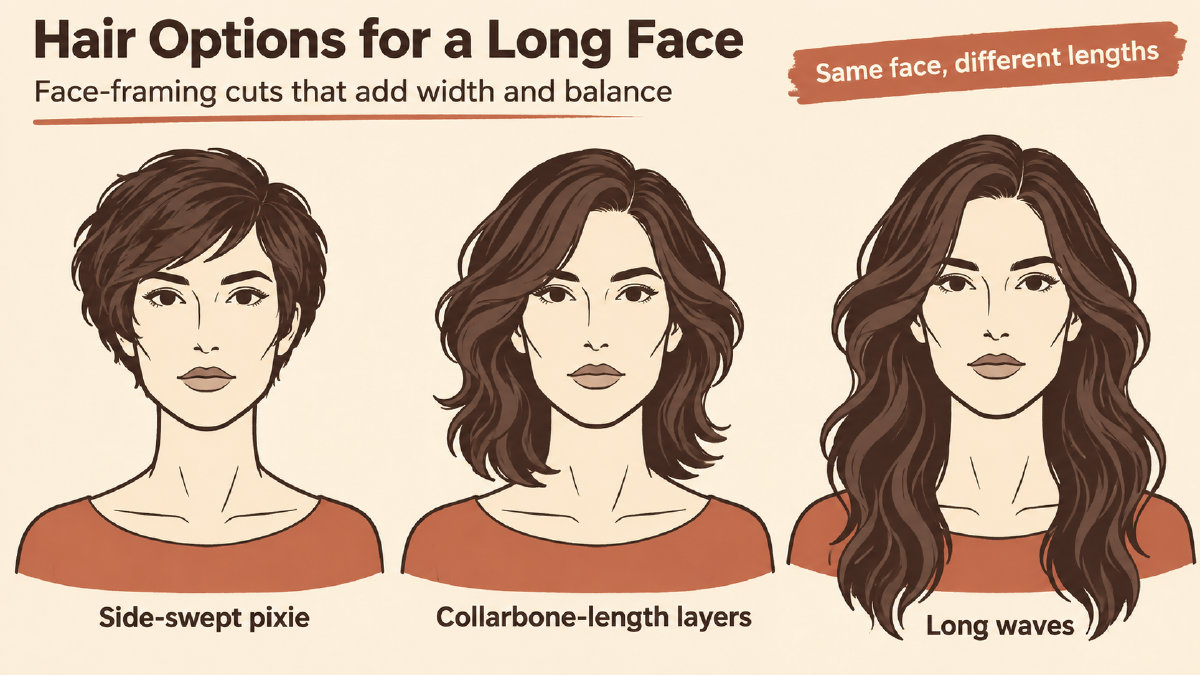
And while some of the details might seem similar between a square and rectangle face shape, there are still some important differences. For example, a square face usually has very defined cheekbones and jaw, but they tend to be softer. A rectangle face shape tends to have slightly more definition on the cheeks and jaw, and the corners of the face are a bit more pronounced. But again, this can vary from person to person, so it’s always good to bring pictures of your face to your stylist. Look for similar widths across your forehead, cheeks and squarer jaw. A square outline is shorter, while an oblong outline has softer corners. But some salons use oblong and rectangle to mean the same thing.
Let’s get started!
Step 1: Decide What Silhouette You Want
The first step in choosing the right haircut for your face shape is to decide what silhouette you want.
Some people prefer a shorter, more angular silhouette. Others prefer something that looks a bit softer with less apparent length.
So let’s talk about the options…
Option #1 – Less Apparent Length
For this option, you want the haircut to fall somewhere between your chin and collarbone.
This style works well with side fullness, but not too much crown height. So think about side-swept styles rather than extra crown height. Also, avoid anything that has a lot of volume on top.
Option #2 – More Apparent Length
For this option, you want the haircut to actually appear to extend all the way down to your shoulders. This is the type of hairstyle that gives you the illusion of having a longer face.
Side-swept styles work well here, but so do styles with a lot of volume on top. However, you should avoid anything that creates strong angles or lines across your forehead.
Also keep in mind that any styling effects that create visual length will help achieve this goal. That means avoiding straight-across bangs and opting for wispy tendrils that frame the face. Or loose waves that flow down the sides of your head.
Step 2: Choose the Right Cut
Now that we’ve decided on the silhouette, it’s time to pick the actual cut. The easiest way to determine which cut will work best for your face shape is to visualize how each cut would look on your face.
First, let’s look at short cuts.
Short Cuts
A French crop is one of my favorite short hairstyles for people with rectangular faces. If you have a lot of hair on top, a French crop may help you lose weight on top and gain some fullness on the sides. And since it’s a short, fuzzy fringe, it won’t create the sharp angle across your forehead that could emphasize the squareness of your face.
Another great choice is a pixie. Pixies are typically designed to have fullness on the sides and a bit of weight around the ears, but very little weight on top. This makes them ideal for square faces because the weight on the sides helps reduce the prominence of the square jaw.
Softly waved bobs also work very well on square faces. They add softness and fullness to the hair without adding too much volume on top. Plus, they can easily be styled into a soft, rounded shape that eliminates the harsh lines of a square face.
Medium & Longer Cuts
For those of you who prefer a longer, more elongated look, medium and longer cuts are definitely the way to go. While they’ll let you keep some length in your hair, face-framing layers can help break up the apparent length of your face and add fullness around the cheeks. And since you don’t need to worry about having the hair hang over your chin, you can choose just about any medium or long cut.
However, keep in mind that longer cuts can make your face look longer if they fall flat, while cheekbone-level layers and waves can add width and break up the apparent length. So if you’re looking for a more elongated effect, you’ll probably want to go with a longer cut. On the other hand, if you’re looking for something that adds fullness around the cheeks without creating a very long, angular look, then a medium-length cut will work better.
Step 3: Choose the Right Fringe
While the above information should help you find the right haircut for your face shape, there’s another factor to consider when choosing your haircut — the fringe.
Fringe choices can make or break a haircut. And for square faces, you want to avoid any fringe that emphasizes the squareness of your face.
That means avoiding straight-across bangs, and instead opt for a side-swept fringe. Side-swept fringes create a softer diagonal line across the forehead, and they help eliminate the harsh lines of a square face.
You can also use curtain bangs to add softness to your face. Curtain bangs aren’t as popular as they used to be, but they’re still a great choice for square faces. And unlike regular bangs, curtain bangs can be placed anywhere along the forehead, so they can be moved forward to frame the brow, or further back to frame the cheekbones.
And finally, if you’re not a fan of bangs, then you’ll want to avoid blunt bangs. Blunt bangs create a stronger angular line across the forehead, and they’ll only emphasize the squareness of your face. But the advice differs here: Becky B cautions about that angular effect, while Trendy Hair Picks recommends blunt fringe for forehead coverage. So it depends on which effect you want.
Step 4: Choose the Right Style
Once you’ve chosen the right haircut and the right fringe, the next thing to consider is the overall style of the haircut. In general, styles with a center parting work best for square faces. Styles with tapers or fades also work well, but you’ll want to avoid anything that exposes a large amount of length on the sides.
One of my favorite styles for square faces is a low taper. Low tapers retain more side width than higher tapers, and they’re easier to maintain. Plus, they look great on almost everyone.
I also love quiffs, but I recommend keeping the height down. Quiffs are a great way to add apparent length to a haircut, but if you keep the height down, you won’t end up emphasizing the squareness of your face.
Step 5: Consider Your Natural Texture
While the above information should help you choose the right haircut for your face shape, there’s one final thing to consider when choosing your haircut — your natural texture.
Haircuts work best when they complement your natural texture. For example, if you have naturally curly hair, then a layered lob is the perfect cut for you. Curly hair looks amazing in layers, and it adds softness and volume to the hair.
On the other hand, if you have straight hair, then a layered bob is the perfect cut for you. Straight hair looks amazing in layers, and it adds softness and volume to the hair. For curls, think about fullness at cheek height. For coily hair, think about a rounded shape with fuller sides. Wispy bangs are an option for fine hair. Your barber can use your density and growth patterns to decide where to keep weight. Leave room for curls to shrink when your fringe dries.
Step 6: Know How Often You Need It Done
Finally, once you’ve found the perfect haircut for your face shape, the last thing to consider is how often you need it done. Some people like their hair very short, and they’ll go to their barber every few weeks to have it trimmed and shaped. Others like their hair longer, and they’ll only go to their barber every couple of months.
Of course, this all depends on your personal preference. If you’re happy with the way your hair looks, then you don’t need to go to your barber very often. But if you’re not satisfied with the way your hair looks, then you’ll probably need to go to your barber more often.
A French crop takes little styling skill, with a short fringe creating a horizontal line. Curtain bangs need daily refreshing and regular trims, depending on texture and styling goals. For a low taper, The Spot suggests shaping every three to four weeks.
It’s also important to remember that the amount of maintenance required varies depending on your hair type. People with fine hair generally require less maintenance than people with thick, coarse hair. And people with curly hair generally require more maintenance than people with straight hair.
Bring front and side reference photos showing the texture and width you want. Tell your barber how much length you want to show, how full you want the sides, how high you’ll style the top, and your daily routine. Ask which fringe suits your features and lifestyle.
So before you go to your barber, ask yourself these questions:
• Do I want my hair very short?
• Do I want my hair longer?
• Am I okay with having to go to my barber every couple of weeks?
• Am I okay with having to go to my barber every couple of months?
If you answered “no” to any of these questions, then you probably won’t need to go to your barber very often.
In conclusion, there are many different ways to style your hair, and no two people are exactly alike. But I hope this article has helped you choose the right haircut for your face shape.
Sources
- Best & Worst Haircuts For Rectangle Face Shapes + Styling Tips
- Rectangle Face Shape Hairstyles: 25 Balancing Cuts
- 26 Amazing Men’s Hairstyles for Rectangle Faces to Try
- A Guide to Curtain Bangs: How to Cut and Style this Trendy Haircut | Vogue
- Which Haircut Fits You? Face Shape Styles That Work
- Taper Fade Haircut and What to Know Before You Sit Down · The Spot
Measure your own face
Free, in your browser. Your photo is never uploaded.
- Attractiveness TestFace rating, PSL range and eye type.
- Face Symmetry TestHow evenly the two sides match.
- Jawline AnalyzerJaw angle, jaw width and chin taper.