
How to Choose, Trim and Maintain a Short Beard
Choose a short beard length and shape, learn documented trimming steps for clean neck and cheek lines, and build a simple upkeep routine.
Table of Contents
I’ve been meaning to write about beard trimming for some time now, but I just haven’t had the opportunity. So today, I thought I’d finally get to it. If you’re looking for tips on how to trim your beard, or if you want help figuring out what style of beard you should have, then this article is for you.
First, I’ll give you my personal opinion on how to choose the right beard style for you. Then I’ll give you my step-by-step instructions on how to actually trim your beard. Finally, I’ll show you how to maintain your short beard once it’s trimmed.
Let’s start with choosing the right beard style.
Choosing the Right Style
There are so many different styles of beards, and each person will find that one particular style suits them best. The problem is that people often go in search of a specific beard style without first considering whether or not they can grow that kind of beard. And sometimes, even when they do consider their ability to grow a certain type of beard, they still end up with something that looks awkward on them simply because it doesn’t suit their face shape.
So before you settle on any particular beard style, you need to decide whether or not you think you can actually grow that kind of beard. You also need to determine which styles look best on your face shape.
But since we all have different opinions on what looks good and what doesn’t, let me give you my own take on beard styles.
Length-Based Starting Options
If you’re just starting out with growing a beard, there are basically two options:
-
Grow it long enough to cover your jawline completely, and then gradually trim it down as needed.
-
Start with a shorter beard, and then gradually grow it longer over time.
I personally prefer option 2. It seems easier (at least for me), and it gives you more flexibility. But again, that’s just my preference. Some people prefer to start with a full beard, and then trim it down as needed.
Now, here’s where things get a little confusing. What exactly constitutes a “short” beard? Is it defined edges at the cheeks and neckline? Or is it just a certain length?
According to Live Bearded, “Short beard” is defined subjectively, and has no universal cutoff. For example, he says, “A short beard may mean one length throughout, or it may mean shorter sideburns blending into longer chin.” GQ puts a corporate beard at around 8–12 mm and describes a short boxed beard as having more defined, angular shaping on the cheeks.
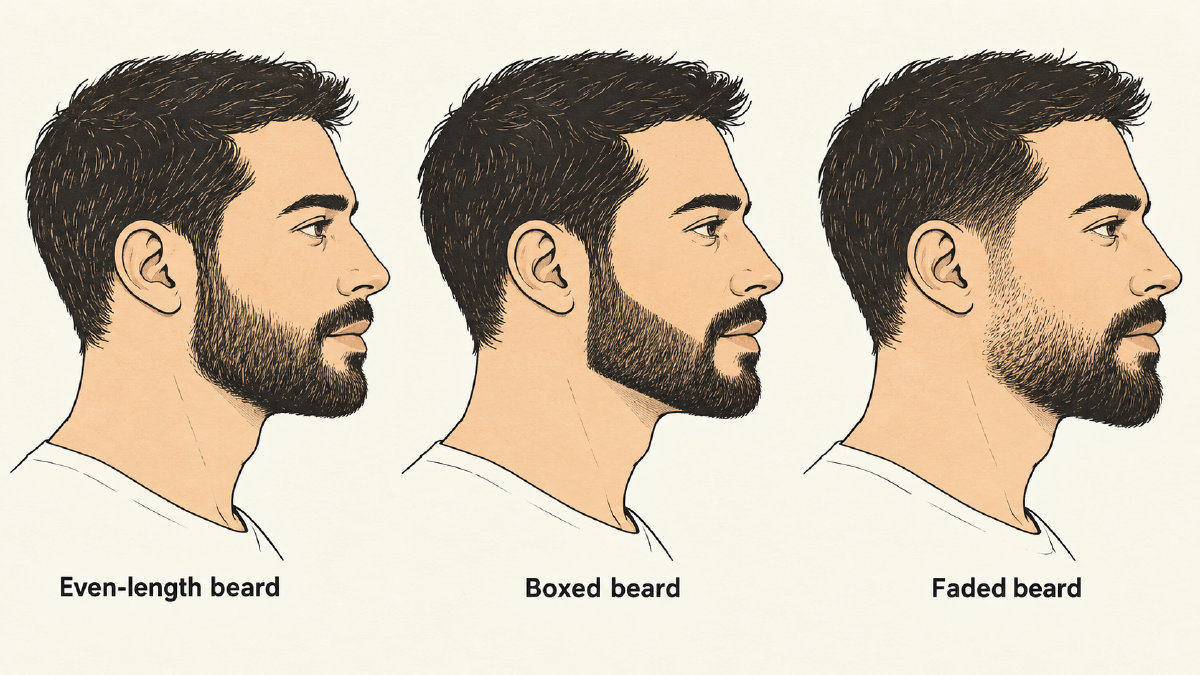
GQ magazine defines a heavy stubble as approximately 4–5 mm. That’s really quite short. A corporate beard is typically around 8–12 mm. It’s described as having “a very defined cheek and neckline edge,” but is “not too angular.” A short boxed beard is “more defined, angular cheeks than the corporate beard.” GQ describes a short fade as having “a fuller area near the chin, and shorter areas on the cheeks and sideburns.”
So depending on who you ask, a short beard could be anything from 4–5 mm to 12 mm, and everything in between.
In addition, GQ also shows a couple of examples of what they consider to be a short beard. In the first picture, the beard is pretty much evenly distributed throughout the entire face. In the second picture, the beard is much more tapered, with a fuller bottom and much shorter cheeks and sideburns.
You can see how the proportions are really just a matter of personal styling choice. Some people like to make themselves appear taller by making their beard appear shorter, and others like to make themselves appear wider by making their beard appear longer.
That said, there are definitely some styles of beards that are better suited to certain face shapes. For example, an oblong face benefits from a short beard that has shorter bottom and fuller sides. This helps balance out the length of the face.
But again, this is just my opinion. Everyone has his or her own idea of what looks good and bad on them.
Angular Shaping
In addition to varying lengths, you can also vary the shape of your beard. For example, you can keep it rounded, or you can shape it into a sharper, more angular style.
And just like with length, there’s no hard-and-fast rule about how angular your beard should be. But if you want less apparent facial length, then you’ll probably want your beard to be more angular.
Trimming Your Beard
Once you’ve decided on the style of beard you want, the next step is to learn how to trim it. And for that, I’m going to turn to my friend Connor at GQ, who does a great job explaining how to trim and shape a beard.
First, he explains the difference between an even silhouette and a tapered silhouette.
Next, he talks about surrounding fullness or reduced contrast. Basically, uneven coverage can be softened either by adding fullness around the uneven area, or by reducing the contrast between the uneven area and the rest of the beard. So you can let the surrounding hair grow longer, or trim the denser areas slightly shorter so the patchy spots don’t stand out as much.
He continues by showing how you can use a comb to blend the hair in order to achieve a more even appearance.
For the actual trimming sequence, I’ll turn to Philips. They recommend starting with the highest comb setting when trimming for the first time. Then trim against the direction of growth to remove excess bulk. Repeat with shorter settings until you get the desired length. Check the instructions for your own trimmer, since the settings depend on the model. Philips explains that its comb markings tell you the length of hair left after trimming.
He finishes up by shaping the cheeks and mustache.
Maintaining Your Short Beard
Of course, trimming your beard is only half the battle. You also need to know how to maintain your short beard once it’s trimmed. For that, I’ll turn to Philips. They have a manufacturer-documented overall trimming sequence, so I’ll follow along with their instructions rather than trying to summarize a tutorial that I’ve never tested myself.
First, they recommend washing and drying your beard and face before beginning.
Next, they explain how to place the neckline. According to Philips, the neckline should be placed away from the jawline. However, they don’t specify how far away, so they suggest using your finger to horizontally place the line just above your Adam’s apple as a starting reference.
Then, they recommend trimming a vertical strip below the reference line.
From there, work outward under your jawline to one side, then return to the center and work your way to the other side.
Finally, they describe how to shape the cheeks.
Beard Trimming Tips
While I’m not sure about every detail of the Philips instructions, I do know that the key point is that you shouldn’t try to force the beard into any specific shape. Instead, you should work with the natural contours of your face.
So, if you’re unsure about where to begin trimming, you can always start at the center of your face and work outward. If you want to shape your cheeks, then you can leave them untouched, or you can create a straight or slightly rounded line that follows the bottom of your sideburns.
The same goes for your mustache. If you want to shape it, then you can leave it untouched, or you can shape it to match the shape of your beard. Philips suggests keeping your mustache the same length as your beard, or leaving it longer. You can also leave a 1 mm clear line above your upper lip if you want.
As for the actual trimming process, you’ll want to use a clipper with a comb attachment. You’ll start by placing the comb against the direction of your hair growth, and then slowly move it downward toward the base of your beard. Repeat this process until the whole beard is trimmed to the desired length.
When it comes to shaving, you’ll want to use a razor and shave in the direction of hair growth. Shaving against the grain can cause ingrown hairs in some people.
Also, you’ll want to rinse the razor after each swipe to remove excess hair.
Beard Care Routine
Now that you’ve got your beard trimmed, it’s time to start your beard care routine. Here’s how I take care of my beard on a daily basis.
First, I wash my beard and face with a gentle cleanser suited to my skin type. I always use a beard conditioner, but I won’t go into details about the exact products I use because those aren’t important to the general topic of beard care. What is important is that you select a product suited to your skin type. Once your beard has grown in, if you have acne-prone skin, then you’ll want to use a beard conditioner. If you have normal to dry skin, then beard oil is a great option. If you have sensitive skin that tends to become irritated easily, then a fragrance-free, non-comedogenic moisturizer is your best bet.
After applying your chosen product, use a beard comb to distribute the product evenly throughout your beard and to help with styling.
Beard Trimming Schedule
Now that you’ve got your beard trimmed, it’s time to establish a trimming schedule. How often you should trim your beard depends on how fast your beard grows, and how long you want your beard to be. But as a starting point, I would recommend trimming your beard weekly to keep your beard looking consistent and well-groomed.
Sources
Measure your own face
Free, in your browser. Your photo is never uploaded.
- Attractiveness TestFace rating, PSL range and eye type.
- Face Symmetry TestHow evenly the two sides match.
- Jawline AnalyzerJaw angle, jaw width and chin taper.